Belly Fat After 40: Why It Matters and How to Lose It
Belly fat after 40 is more than a fit problem. In a Mayo Clinic analysis of 15,184 US adults, men of normal weight who carried their fat around the middle had 2.24 times the risk of dying of men who were overweight by BMI alone. The scale said fine. The waist told a different story.
The reason is visceral fat, the deep fat packed around your liver and intestines. Below you will find what it does, why it tends to grow after 40, how to check yours with a tape measure, and what the research says actually shrinks it. If you prefer to watch, our six-minute film covers the same ground.
What is visceral fat?
Visceral fat is the fat stored deep inside your abdomen, behind the muscles, wrapped around organs such as the liver, stomach and intestines. Most body fat is subcutaneous, the soft layer just under the skin that you can pinch. Visceral fat is a smaller share of the total, but it is far more active, and it is the kind most closely tied to heart disease and type 2 diabetes.
| Subcutaneous fat | Visceral fat | |
|---|---|---|
| Where it sits | Just under the skin, on the belly, hips and thighs | Deep in the abdomen, around the organs |
| Can you pinch it? | Yes | No |
| How active it is | Mostly storage | Releases hormones and inflammatory signals |
| Link to health risk | Weaker | Stronger, especially for heart disease and diabetes |
Shape matters too. Two people can weigh exactly the same, and the one shaped more like an apple, with fat around the middle, usually carries more risk than the one shaped like a pear, with fat on the hips and thighs. Research has linked lower-body fat with healthier blood sugar and cholesterol.
Why is belly fat dangerous?
Belly fat is dangerous because visceral fat behaves like an organ, not a storage tank. Its cells send out hormones and inflammatory signals, and its blood drains straight to the liver. Over time that can push up blood sugar, blood pressure and cholesterol, all without any symptoms you would feel.
- A direct line to the liver. Blood leaving visceral fat flows into the portal vein, which runs straight to the liver. In a Washington University study, blood in the portal vein carried about 50% more of the inflammatory signal interleukin-6 than blood in the arteries. Over time this can help fat build up in the liver too. See our guide to liver function tests.
- Insulin works less well. As visceral fat grows, fat cells release less adiponectin, a hormone that helps your body respond to insulin. That is one reason belly fat and insulin resistance so often travel together.
- Quiet, constant inflammation. Swollen fat cells attract immune cells that release more inflammatory signals. It is a low-grade fire you never feel, but it reaches your blood vessels every day.
- Higher triglycerides. Excess belly fat is closely tied to high triglycerides and low HDL cholesterol. Here is what lowers triglycerides, ranked by effect.
The effects may reach the brain as well. In a Kaiser Permanente study, researchers measured the bellies of 6,583 adults aged 40 to 45 and followed them for about 36 years. Compared with people of normal weight and belly size, those who were obese and had a large belly were 3.6 times as likely to develop dementia. This was an observational study, so it shows a link rather than proof of cause.
Why belly fat increases after 40
Belly fat tends to increase after 40 because several slow changes stack up at once: muscle declines, hormones shift, and sleep and stress often get worse. Even if your weight stays the same, fat tends to move inward, from the hips and limbs toward the abdomen.
- Less muscle. Muscle mass slowly falls with age, so the body burns a little less energy at rest. Strength training is the best way to protect it. Our strength training guide shows how 90 minutes a week fits into two sessions.
- Menopause. Falling estrogen shifts where women store fat, from the hips and thighs to the belly.
- Lower testosterone. In men, testosterone drifts down with age, which is linked to more abdominal fat.
- Long-term stress. Chronically high cortisol favors fat storage around the middle.
- Short sleep. This one surprises people, so it gets its own section below.
Sleep and belly fat
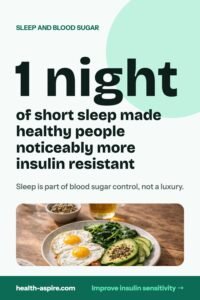
In a Mayo Clinic experiment, 12 healthy adults slept four hours a night for two weeks. They ate more than 300 extra calories a day and gained only about a pound. But their visceral fat grew by 11% compared with normal sleep, and it kept rising during three nights of catch-up sleep. Small study, clear signal: protecting your sleep protects your waist.
Sugary drinks and belly fat
In the Framingham Heart Study, about 1,000 adults had CT scans six years apart. People who had at least one sugar-sweetened drink a day showed a 27% greater increase in visceral fat than those who had none, regardless of how much weight they gained. Diet soda was not linked to more visceral fat in that study.
How to measure your belly fat at home
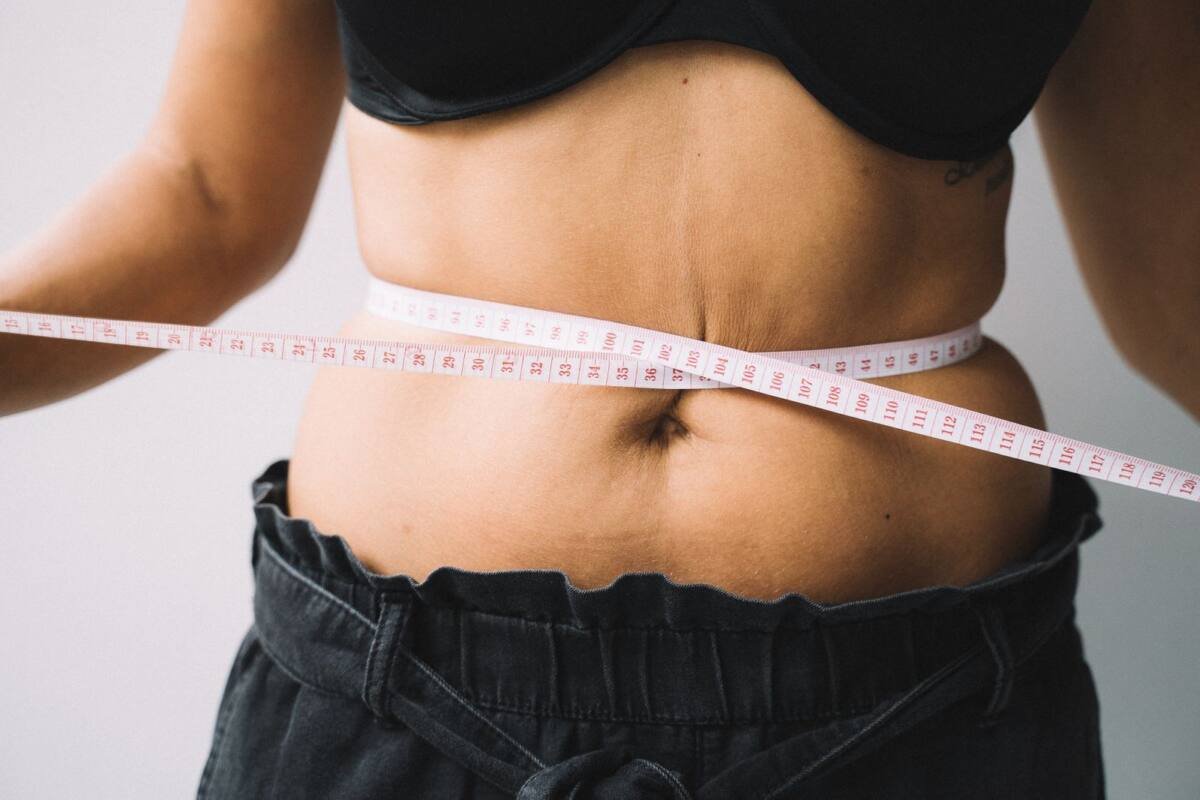
The simplest way to check belly fat at home is a tape measure. Stand up straight, breathe out normally, and wrap the tape snugly around your waist just above your hip bones, roughly level with your belly button. Keep the tape flat and don’t pull it tight. Then compare the number with your height.
| Check | Healthier | Higher risk |
|---|---|---|
| Waist-to-height ratio (everyone) | Under 0.5 (waist less than half your height) | 0.5 or more |
| Waist size, men | 40 inches (102 cm) or less | Over 40 inches |
| Waist size, women | 35 inches (88 cm) or less | Over 35 inches |
Why not just use BMI? Body mass index only compares weight with height, so it can’t see where the fat is. Some people look slim and still carry a lot of fat inside, sometimes called “thin outside, fat inside.” That is exactly what the Mayo Clinic analysis found: the waist told doctors more than the weight.
Our free waist-to-height ratio calculator does the math in about 30 seconds and tells you what your number means.
How to lose belly fat after 40: what works
The good news is that visceral fat is active, and that makes it responsive. It is often among the first fat to shrink when you start moving more. The steps that work are simple, and they add up:
- Move most days. Brisk walking, cycling or swimming. In a review of 117 studies, exercise cut visceral fat by about 6% even when people lost little weight, while dieting alone barely changed it (about 1%).
- Lift two or three times a week. Strength training protects the muscle you naturally lose after 40, which helps your body handle blood sugar.
- Build meals around protein and fiber. They keep you full and help preserve muscle. Find your daily target with the protein calculator.
- Swap sugary drinks for water. It is one of the easiest changes with direct evidence behind it.
- Drink less alcohol. Heavier drinking is linked to more fat around the middle, and alcohol calories add up fast.
- Aim for seven hours of sleep or more. As the Mayo Clinic study showed, short sleep alone can grow visceral fat.
- Measure your waist once a month. Your waist often changes before the scale does.
If you want a calorie target to go with these habits, our calorie calculator gives you one based on your age, size and activity.
Can you lose belly fat with sit-ups?
No. You can’t choose where your body burns fat. In a classic University of Massachusetts study, people did 5,004 sit-ups over 27 days. Their fat cells shrank by about the same amount on the belly, the upper back and the buttocks. Sit-ups strengthen the muscles underneath, which is useful, but the fat on top answers to your whole body.
When to talk to your doctor
If your waist is above the cutoffs, it is worth asking your doctor to check the numbers that belly fat tends to move: blood pressure, fasting glucose or A1C, triglycerides, HDL cholesterol and liver enzymes. Doctors use several of these together to diagnose metabolic syndrome. Ask too if your waist grows quickly without an obvious reason. To see how these numbers add up for your heart, our free heart attack risk calculator estimates your 10-year risk using the American Heart Association’s PREVENT equations.
What to do next
- Estimate your 10-year heart risk: the free heart attack risk calculator.
- Check your waist in 30 seconds: waist-to-height ratio calculator.
- See how old your metabolism is: metabolic age calculator.
- Learn how belly fat and blood sugar connect: insulin sensitivity explained.
- Get the full picture after 40: the free 14-point health check.
FAQ
What is the fastest way to lose belly fat after 40?
There is no shortcut, but regular aerobic exercise is the most reliable way to shrink visceral fat, even before the scale moves. Combine it with strength training, enough sleep, fewer sugary drinks and a modest calorie deficit for the best results.
How do I know if I have visceral fat?
Only a scan such as CT, MRI or DEXA measures visceral fat directly. At home, your waist is a good stand-in: a waist-to-height ratio of 0.5 or more, or a waist over 40 inches for men or 35 inches for women, suggests more visceral fat and higher risk.
Can you be thin and still have too much belly fat?
Yes. People with a normal BMI can still carry a lot of visceral fat. In the Mayo Clinic analysis, normal-weight men with central obesity had a higher risk of death than men who were overweight by BMI alone.
Does diet soda cause belly fat?
In the Framingham study, sugar-sweetened drinks were linked to a larger increase in visceral fat, while diet soda was not. Water is still the simplest choice.
Sources
- Sahakyan K.R., Somers V.K., Rodriguez-Escudero J.P., et al. Normal-weight central obesity: implications for total and cardiovascular mortality (Annals of Internal Medicine, 2015)
- Fontana L., Eagon J.C., Trujillo M.E., et al. Visceral fat adipokine secretion is associated with systemic inflammation in obese humans (Diabetes, 2007)
- Covassin N., Singh P., McCrady-Spitzer S.K., et al. Effects of experimental sleep restriction on energy intake, energy expenditure, and visceral obesity (Journal of the American College of Cardiology, 2022)
- Ma J., McKeown N.M., Hwang S.J., et al. Sugar-sweetened beverage consumption is associated with change of visceral adipose tissue over 6 years of follow-up (Circulation, 2016)
- Whitmer R.A., Gustafson D.R., Barrett-Connor E., et al. Central obesity and increased risk of dementia more than three decades later (Neurology, 2008)
- Verheggen R.J.H.M., Maessen M.F.H., Green D.J., et al. A systematic review and meta-analysis on the effects of exercise training versus hypocaloric diet on visceral adipose tissue (Obesity Reviews, 2016)
- Katch F.I., Clarkson P.M., Kroll W., et al. Effects of sit up exercise training on adipose cell size and adiposity (Research Quarterly for Exercise and Sport, 1984)
- National Heart, Lung, and Blood Institute. Assessing your weight and health risk
- National Institute for Health and Care Excellence (NICE). Obesity: identification, assessment and management, waist-to-height ratio update (2022)
This guide is for education and is not medical advice. Talk to your doctor before changing your diet, exercise or medication. See our medical disclaimer. Photo: Anna Tarazevich / Pexels.
Free cheat sheet + weekly email
A short, honest health email. Every Thursday.
The week’s most useful research for life after 40, explained in plain English, plus one step picked for what matters to you. No spam, no selling your email, unsubscribe in one click.
Free gift: our 1-page Lab Markers Cheat Sheet (PDF), the 15 numbers on routine blood and urine tests that matter most after 40. It arrives as soon as you confirm your email.