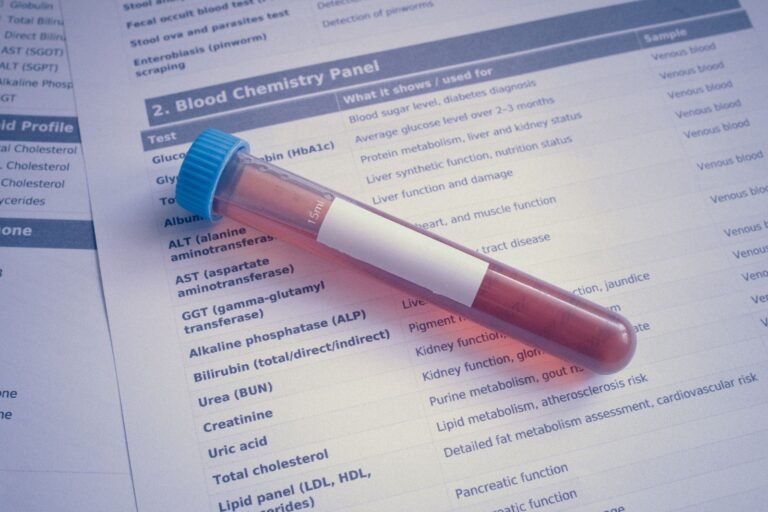
Cholesterol Levels by Age: Healthy Ranges for Adults Over 40

Search for cholesterol levels by age and you will find charts that suggest a 60-year-old can “get away” with higher numbers than a 30-year-old. That is not how the guidelines work. For adults, the healthy ranges are the same at 25 and at 65. What changes with age is how fast cholesterol builds up in your arteries, how much risk your numbers carry, and how low your doctor may want your LDL to be.
Cholesterol levels by age: the chart
The table below shows the ranges used by US labs and guidelines. Children and teens have their own, slightly lower cut-offs. From age 20 onward, one set of numbers applies for life.
| Age group | Total cholesterol | LDL | HDL | Triglycerides | Non-HDL |
|---|---|---|---|---|---|
| 19 and younger | under 170 mg/dL | under 110 mg/dL | over 45 mg/dL | under 75 (age 0–9), under 90 (age 10–19) | under 120 mg/dL |
| 20 and older, men | under 200 mg/dL | under 100 mg/dL | 40 mg/dL or higher | under 150 mg/dL | under 130 mg/dL |
| 20 and older, women | under 200 mg/dL | under 100 mg/dL | 50 mg/dL or higher | under 150 mg/dL | under 130 mg/dL |
So the honest answer to “what is a normal cholesterol level for a 50-year-old?” is the same as for a 30-year-old: total under 200, LDL under 100, HDL at least 40 for men or 50 for women, and triglycerides under 150. If your report shows numbers above these, read our guide to cholesterol test results explained for what each line means.
Why the same numbers matter more after 40
Cholesterol damage is cumulative. LDL particles slip into the artery wall a little at a time, so the total “dose” depends on both how high your LDL is and how many years it has been that high. A 45-year-old with an LDL of 160 has often carried it for many years already.
Age also multiplies every other risk factor. The same LDL, blood pressure and blood sugar give a much higher 10-year risk of heart attack at 55 than at 35. That is why guidelines now set your LDL goal by your overall risk, and why the most useful next step after a lipid panel is to check your 10-year heart risk.
How cholesterol levels change with age
Cholesterol levels by age usually drift upward through adulthood, but men and women follow different paths.
- Men tend to see LDL and total cholesterol climb through their 30s and 40s, often alongside weight gain around the waist.
- Women usually have lower LDL and higher HDL than men until midlife. Around menopause, LDL and total cholesterol rise noticeably, often within a year or two of the last period (El Khoudary et al., 2020).
- Triglycerides go up with weight gain, alcohol, and insulin resistance at any age. Our article on insulin resistance and aging explains the link.
- After about 70, average cholesterol often levels off or falls slightly. That does not mean the risk has gone away.
Cholesterol levels for men over 40
For men, 40 is the age when cholesterol starts to matter in a very practical way. Heart disease tends to appear about a decade earlier in men than in women, and many first heart attacks happen with no warning at all.
What to watch if you are a man over 40:
- LDL above 130 mg/dL, especially if it keeps creeping up from test to test.
- HDL below 40 mg/dL with triglycerides above 150 mg/dL. This pair often travels with a growing waist and early insulin resistance.
- Family history. A father or brother with heart disease before 55 (or a mother or sister before 65) counts as a risk-enhancing factor in US guidelines.
- Coronary calcium. For men 40 and older at borderline or intermediate risk, a coronary artery calcium (CAC) scan can show whether plaque is already present.
I started paying attention to this myself after a routine blood test came back with high cholesterol. My father died of a heart attack at 45, so a number that looks “a bit high” on paper had a very different meaning for me. That story is the reason this site exists.
Cholesterol levels for women over 50
Many women are told for years that their cholesterol is fine, then see it jump after menopause. A rise of this kind is common, and it is worth acting on rather than waiting.
- Expect a change around menopause. LDL often rises, and the protective effect of higher HDL may weaken (El Khoudary et al., 2020).
- Pregnancy history matters. Preeclampsia and early menopause (before 40) are listed as risk-enhancing factors in US guidelines, so tell your doctor if either applies to you.
- HDL of 50 mg/dL or higher is the usual target for women, but a very high HDL does not cancel out a high LDL.
- Coronary calcium. For women 45 and older at borderline or intermediate risk, a CAC scan can help decide whether treatment makes sense.

Your LDL goal depends on your risk, not your age alone
Charts of cholesterol levels by age only tell part of the story. The 2026 ACC/AHA dyslipidemia guideline sets LDL goals by your estimated 10-year risk of heart attack and stroke, calculated with the American Heart Association PREVENT equations for adults 30 to 79.
| Your situation | LDL goal | Non-HDL goal |
|---|---|---|
| Borderline or intermediate risk (3% to under 10% in 10 years) | under 100 mg/dL | under 130 mg/dL |
| High risk (10% or more in 10 years) | under 70 mg/dL | under 100 mg/dL |
| LDL of 190 mg/dL or higher | under 100 mg/dL, usually with medicine | |
| Known heart disease, very high risk | under 55 mg/dL | under 85 mg/dL |
Free tool
What is your 10-year heart risk?
Enter the numbers from your last check-up and see your risk of heart attack, stroke and heart failure, based on the AHA PREVENT equations.
How often to check cholesterol levels by age
- Children: once between ages 9 and 11 and again between 17 and 21, and earlier (from age 2) if there is a family history of very high cholesterol or early heart disease.
- Healthy adults: every 4 to 6 years, according to the CDC.
- After 40, or with risk factors: more often, as your doctor advises. Many people over 40 end up testing every year or two.
- After starting or changing cholesterol medicine: a recheck in 4 to 12 weeks, then every 3 to 12 months as needed.
- Lp(a), once in a lifetime: the 2026 guideline recommends that every adult has Lp(a) measured at least once. Read why in our guide to the Lp(a) test.
How to improve your numbers after 40
Lifestyle changes work best on triglycerides and HDL, and they lower LDL by a modest but real amount. They also improve blood pressure and blood sugar at the same time, which is why the AHA puts them at the center of its Life’s Essential 8.
- Swap saturated fat for unsaturated fat. Use olive oil, nuts and fish in place of butter, fatty meat and processed meat.
- Eat more soluble fiber. Oats, beans, lentils and barley bind cholesterol in the gut. Our longevity diet guide shows how to build meals around them.
- Move most days. Regular aerobic exercise lowers triglycerides and can raise HDL. See our guide to cardio for heart health after 40.
- Lose some waist if you need to. Even a 5% weight loss lowers triglycerides. Our guide to weight loss after 40 covers what actually works.
- Stop smoking. Quitting raises HDL, and heart risk starts falling within the first few years.
If your LDL is in the 160s or above, read what your LDL number means before deciding that diet alone will be enough.
Frequently asked questions
Do cholesterol levels go up with age?
Usually, yes. Average cholesterol levels by age show LDL and total cholesterol rise from early adulthood into the 50s and 60s, and women often see a sharp rise around menopause. The healthy target ranges, however, stay the same.
Is a cholesterol of 200 high for a 60-year-old?
A total cholesterol of 200 to 239 mg/dL is “borderline high” at any adult age. At 60, what matters more is your LDL, your HDL and your overall 10-year risk, so look at the whole panel rather than the total alone.
Is a cholesterol of 240 dangerous?
A total cholesterol of 240 mg/dL or more is classed as high. It is not an emergency, but it is a clear reason to talk with your doctor, check your LDL, and estimate your 10-year risk.
What is a normal cholesterol level for a 50-year-old woman?
The same as for any adult: total under 200 mg/dL, LDL under 100 mg/dL, HDL of 50 mg/dL or higher, and triglycerides under 150 mg/dL. Expect your numbers to shift around menopause and recheck them if they have not been tested in the last few years.
For the bigger picture, our heart health after 40 hub brings together blood pressure, blood sugar, family history and the habits that protect your heart.
Sources
- Blumenthal R.S., Morris P.B., Gaudino M., et al. 2026 ACC/AHA/Multisociety Guideline on the Management of Dyslipidemia (Circulation, 2026)
- Third Report of the National Cholesterol Education Program (NCEP) Adult Treatment Panel III (Circulation, 2002)
- Expert Panel on Integrated Guidelines for Cardiovascular Health and Risk Reduction in Children and Adolescents (Pediatrics, 2011)
- El Khoudary S.R., et al. Menopause Transition and Cardiovascular Disease Risk: An AHA Scientific Statement (Circulation, 2020)
- Grundy S.M., et al. 2018 AHA/ACC Guideline on the Management of Blood Cholesterol (Circulation, 2019)
- High Cholesterol Facts, Centers for Disease Control and Prevention
- Lloyd-Jones D.M., et al. Life’s Essential 8 (Circulation, 2022)
Free weekly email
A short, honest health email. Every Thursday.
The week’s most useful research for life after 40, explained in plain English, plus one step picked for what matters to you. No spam, no selling your email, unsubscribe in one click.