Metabolism
Metabolic health is how well your body turns food into energy, keeps blood sugar steady and stores fat in the right places. After 40 it changes, mostly because of muscle loss, belly fat and shorter sleep. The good news: every one of those can be improved.
Start here
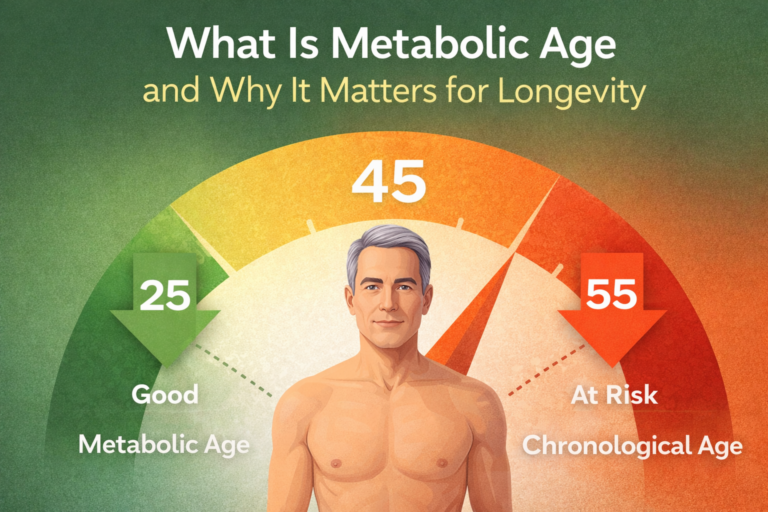
- Metabolic age: what the number means
What metabolic age is, how it is estimated and how to lower it.
- Insulin resistance and aging after 40
Why the same food hits differently at 45, and what changes inside your cells.
- How to improve insulin sensitivity
The habits with the strongest evidence: muscle, movement after meals, sleep.
- Metabolic flexibility
How a healthy metabolism switches between fuels, and how to train it.
- The complete metabolic health guide
Everything in one place, once you have the basics.
Why metabolic health matters after 40
Poor metabolic health rarely causes symptoms at first. Blood sugar can look normal for years while your body quietly needs more and more insulin to keep it there. Over time this raises the risk of type 2 diabetes, heart disease and fatty liver, and it makes it harder to keep a healthy weight.
Three habits do most of the work: building muscle, moving after meals and sleeping seven hours or more. Food quality matters too, but it works best on top of those three. The guides above explain each one in plain language, with the research behind it.
How do I know where I stand?
Your waist-to-height ratio is a simple first check: a waist under half your height is a good sign. For a fuller picture, ask your doctor for fasting glucose, HbA1c and a lipid panel, or start with our metabolic age calculator.
More on metabolism
- Insulin Resistance: The Silent Driver of Accelerated Aging

- What Is Metabolic Age and Why It Matters for Longevity
- Metabolic Health After 40: Why It Matters for Longevity

- Ozempic and the Weight Loss Revolution: What You Need to Know in 2025



Not sure where to start?
Check your metabolic age in 60 seconds, or start with the simplest marker of all: your waist-to-height ratio.