Top Health and Wellness Websites You Can Trust in 2026

When my own blood test came back with high cholesterol, I did what most people do: I searched. Within ten minutes I had read that eggs were dangerous, that eggs were fine, and that a supplement could “melt plaque”. The problem was never a lack of health information. It was knowing which websites to trust. This is the short list I wish I had that day.
How we chose these websites
Every site below meets the same four tests. It is run by a hospital, a medical society, a government health agency, a research group or an independent team with a clear editorial process. Its articles are written or reviewed by people with relevant qualifications. It cites research or guidelines, so you can check its claims. And the core content is free to read.
Popularity was not a test. Some of the biggest health sites are driven by advertising and clicks; the ones here are driven by evidence.
The most trustworthy health and wellness websites in 2026
1. MedlinePlus (US National Library of Medicine)
MedlinePlus is the National Institutes of Health’s site for patients. It explains conditions, lab tests and medicines in plain English, with no ads and no products to sell. Best for: understanding a diagnosis, a drug or a blood test result.
2. Mayo Clinic
The Mayo Clinic library covers symptoms, diseases and tests, written and reviewed by Mayo’s medical staff. Pages are clear and practical. Best for: a reliable first look at almost any condition.
3. Cleveland Clinic
Cleveland Clinic Health Library is especially strong on heart and vascular topics, which makes sense for one of the top-ranked heart hospitals in the US. Best for: heart conditions, procedures and what to expect from treatment.
4. Centers for Disease Control and Prevention (CDC)
The CDC publishes US public health guidance and data, from blood pressure and diabetes to vaccines and physical activity. Best for: official prevention guidance and national statistics.
5. American Heart Association
The American Heart Association writes the guidelines many doctors follow, and it also publishes patient-friendly pages on cholesterol, blood pressure and Life’s Essential 8, its checklist for heart health. Best for: heart and stroke prevention straight from the guideline authors.
6. National Institute on Aging
The National Institute on Aging focuses on health in later life: memory, sleep, exercise, falls and caregiving. Best for: adults over 50 and the people who care for them.
7. NHS (UK National Health Service)
The NHS health A to Z is short, direct and free of jargon. Treatment details follow UK practice, but the explanations work anywhere. Best for: fast, no-nonsense answers.
8. Harvard Health Publishing
Harvard Health Publishing turns research into readable articles from Harvard Medical School faculty. Some long reports are paid, but many articles are free. Best for: what new studies mean in everyday terms.
9. Johns Hopkins Medicine
The Johns Hopkins Medicine health library offers clear explanations of conditions and treatments from one of the leading US academic medical centers. Best for: a second trusted opinion alongside Mayo Clinic.
10. Cochrane
Cochrane is an international network that reviews all the good-quality studies on a question and summarizes what they show together. Each review comes with a plain-language summary. Best for: finding out whether a treatment really works.
11. Examine
Examine is an independent team that analyzes the research on supplements and nutrition. It sells no supplements and takes no advertising. The basic pages are free; detailed study summaries need a paid Examine+ membership. Best for: checking a supplement before you buy it.
12. PubMed
PubMed is the free search engine for medical research. It is not written for patients, but it is where you go when an article says “a study found” and you want to see the study yourself. Best for: checking the original source.
| Website | Run by | Best for |
|---|---|---|
| MedlinePlus | US National Library of Medicine | Conditions, drugs, lab tests |
| Mayo Clinic | Academic medical center | Any condition, first look |
| Cleveland Clinic | Academic medical center | Heart and vascular health |
| CDC | US public health agency | Prevention guidance, statistics |
| American Heart Association | Medical society | Heart and stroke prevention |
| National Institute on Aging | US research institute | Health after 50, caregiving |
| NHS | UK health service | Short, plain answers |
| Harvard Health Publishing | Harvard Medical School | New research explained |
| Johns Hopkins Medicine | Academic medical center | Conditions and treatments |
| Cochrane | Research network | Does a treatment work? |
| Examine | Independent research team | Supplements and nutrition |
| PubMed | US National Library of Medicine | Original studies |
How to judge any health website in 6 questions
No list covers everything. When you land on a site you do not know, these six questions will tell you most of what you need:
- Who runs it? Look for an About page that names a real organization or real people. Anonymous sites are a warning sign.
- Who wrote or reviewed this page? Good sites name the author and often a medical reviewer, with their qualifications.
- Does it cite sources? Claims should link to studies, guidelines or official agencies, not to other blog posts.
- When was it updated? Medical advice changes. A cholesterol article from 2015 may contradict current guidelines.
- Is it selling something? If every article ends with a product that fixes the problem, the advice is marketing.
- Does it sound too good to be true? “Reverse,” “cure,” “melt” and “doctors don’t want you to know” rarely come with good evidence.
Some readers remember the HONcode badge, a certificate that once marked trustworthy health sites. The Health On the Net Foundation that issued it has shut down, so the badge no longer means anything. The questions above do the same job.
Red flags to watch for
- One study presented as proof, especially a study in mice or a handful of people.
- Advice to stop a prescribed medicine without talking to your doctor.
- Testimonials instead of evidence.
- A countdown timer, a “secret” or a video you cannot skip before you see the price.
- No way to contact the people behind the site.
Where Health Aspire fits
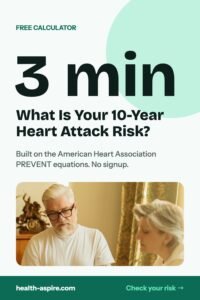
We are a small, independent site, not a hospital, and we do not replace any of the sources above. In fact, we rely on them. What we try to add is focus: plain-English guides for people over 40, every claim linked to a study or guideline, and free tools that turn those guidelines into your own numbers, like our 10-year heart risk calculator based on the American Heart Association’s PREVENT equations. You can read how we work in our editorial standards.
FAQ
What is the most reliable health website?
There is no single winner. For most questions, MedlinePlus, Mayo Clinic and the NHS are excellent starting points because they are free, ad-light and reviewed by medical professionals. For heart health specifically, the American Heart Association writes the guidelines doctors use.
Are health websites a substitute for a doctor?
No. A good website helps you understand your situation and ask better questions. Decisions about tests and treatment should be made with a clinician who knows your history.
How can I check a claim I read online?
Look for the source the article cites, then check it on PubMed or in a Cochrane review. If an article cites nothing, treat the claim with caution.
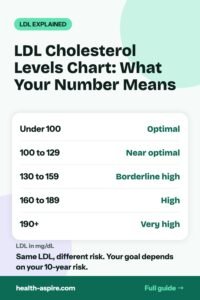
Want to put this into practice? Start with how to read your cholesterol test results or visit our heart health after 40 hub.
Sources
- MedlinePlus, US National Library of Medicine
- National Institute on Aging: health information for older adults
- Health On the Net Foundation and the end of the HONcode certificate
- Examine Help Center: free and Examine+ plans
- Cochrane: systematic reviews and plain-language summaries
Free weekly email
A short, honest health email. Every Thursday.
The week’s most useful research for life after 40, explained in plain English, plus one step picked for what matters to you. No spam, no selling your email, unsubscribe in one click.