Weight Loss After 40
Losing weight after 40 is harder for most people, but not for the reason they think. The goal is not just a smaller number on the scale: it is losing fat while keeping the muscle that protects your metabolism, joints and blood sugar. Here is what the evidence says works.
Is your metabolism really slowing down?
Less than most people believe. A large study of about 6,400 people aged 8 days to 95 years found that, once body size is taken into account, daily energy use stays remarkably stable from age 20 to 60 and only declines slowly after that (Pontzer et al., 2021).
So weight gain in your 40s usually comes from things you can change: less daily movement, gradual muscle loss, shorter sleep, more stress and larger portions. That is good news, because each of them can be reversed.
Why muscle matters when you lose weight
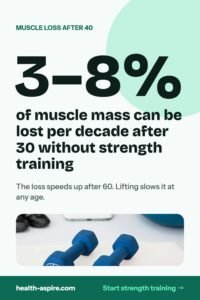
When you cut calories, your body loses some muscle along with fat. After 40 you cannot afford that, because muscle is where most of the sugar from a meal goes and it keeps you strong as you age. Two things protect it: enough protein and regular strength training (Cava et al., 2017).
Five habits that work
- Aim for a moderate calorie deficit. Slow, steady loss is easier to keep up than a crash diet, and it protects more muscle.
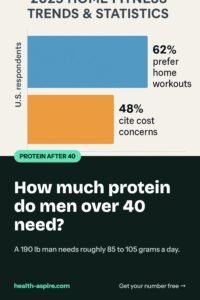
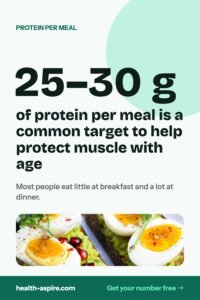
- Eat protein at every meal. Protein keeps you full and helps you keep muscle. Our protein calculator gives you a daily target in grams.
- Strength train twice a week. It tells your body to keep its muscle while fat comes off. See our strength training guide.
- Cut back on ultra-processed food. In a controlled trial, people offered ultra-processed meals ate about 500 more calories a day than on a minimally processed diet with the same nutrients on offer, and gained weight (Hall et al., 2019).
- Sleep 7 hours or more and walk every day. Short sleep increases hunger for sugary food; daily steps add up to more calories than most workouts. Start with our better sleep tips.
How much weight loss makes a difference?
Less than you might think. In the Diabetes Prevention Program, people with prediabetes who lost about 7% of their body weight and walked about 150 minutes a week cut their risk of type 2 diabetes by 58% over about three years (Diabetes Prevention Program Research Group, 2002). For someone weighing 90 kg, that is around 6 kg.
Track your waist, not only the scale
Fat around your waist is the type most linked to heart disease and diabetes. A simple check: your waist should be less than half your height. Strength training can shrink your waist even when the scale barely moves, so measure both.
When should I talk to a doctor?
If you have a lot of weight to lose, diabetes or high blood pressure, your doctor can help you choose a plan and discuss medical treatment options. See a doctor promptly if you lose weight without trying.
Start with two numbers
Check your waist-to-height ratio, then get your daily protein target. Both take less than a minute.
Read next
- Insulin resistance and aging
Why the same food hits differently at 45, and how to reverse it.
- The longevity diet after 40
The foods and eating patterns linked to healthy aging.
- What your metabolic age means
How it is estimated and the habits that lower it.
Sources
- Pontzer H et al. Daily energy expenditure through the human life course. Science, 2021
- Cava E et al. Preserving healthy muscle during weight loss. Advances in Nutrition, 2017
- Hall KD et al. Ultra-processed diets cause excess calorie intake and weight gain. Cell Metabolism, 2019
- Diabetes Prevention Program Research Group. Reduction in the incidence of type 2 diabetes with lifestyle intervention or metformin. New England Journal of Medicine, 2002