Strength Training After 50: The 90-Minute Weekly Sweet Spot
Guest post by Dave Durell, founder of StrengthAfter50.com, a site about strength training for people over 50.
Strength training for 90 minutes a week, split into two sessions, was linked to a 13% lower risk of dying from any cause in a large 2026 study. You don’t need to run marathons or live at the gym. Two 45-minute workouts with your body weight, bands or a pair of dumbbells get you there.
I’ve spent years helping people over 50 get stronger, and this study put a number on something I see every week: a modest, steady dose of strength work goes a long way. Here is what the researchers found, what it means for you, and a simple routine to reach 90 minutes without overdoing it.
What the 2026 strength training study found
Researchers from Harvard and other centers followed 147,374 US adults for up to 30 years, using three long-running studies of nurses and other health professionals. People reported their exercise habits every two years. Over the follow-up, 35,798 participants died, which let the team compare death rates by how much strength training people did.
| Weekly strength training | What the study found |
|---|---|
| 1 to 59 minutes | Lower risk of cancer death (21% lower at 1 to 29 minutes, 18% lower at 30 to 59 minutes) |
| 90 to 119 minutes | 13% lower risk of death from any cause, 19% lower from heart and blood vessel disease, 27% lower from neurological disease |
| 120 minutes or more | No extra benefit beyond the 90 to 119 minute range |
| 60 to 119 minutes plus plenty of aerobic exercise | 45% lower risk of death from any cause, compared with people who did little aerobic exercise and no strength training |
Two things stand out to me. First, the sweet spot was moderate: about 90 minutes a week, not hours. Second, strength training and aerobic exercise worked best together. People who did both had the lowest risk of all.
One honest caveat: this was an observational study. It shows a link, not proof that lifting weights caused the lower risk. People who lift may also sleep better, smoke less or eat differently, and the participants were mostly health professionals. Still, the findings fit decades of research on muscle and healthy aging.
Why strength training matters more after 50
Strength training matters more after 50 because we slowly lose muscle and strength with age, a process called sarcopenia. Less muscle makes everyday tasks harder and raises the risk of falls. Working your muscles against resistance a couple of times a week is the most reliable way to slow that loss, and even reverse some of it.
Muscle loss shows up in ordinary moments first:
- Getting up from a chair without using your hands
- Climbing stairs or carrying groceries
- Lifting a suitcase into an overhead bin
- Getting down to the floor and back up
- Keeping your balance on uneven ground
The benefits reach well past your muscles. Resistance training helps maintain bone density, improves how your body handles blood sugar, supports your joints and makes everyday movement steadier. It isn’t about looking like a bodybuilder. It’s about staying strong enough to live the life you want, on your own terms.
If you want a quick sense of where you stand, grip strength is a simple marker of overall muscle strength. See our guide to grip strength by age.
How to fit 90 minutes of strength training into your week
The easiest way to reach 90 minutes of strength training is two 45-minute full-body workouts on non-consecutive days, with walking or other easy activity in between. That also matches the US Physical Activity Guidelines, which recommend muscle-strengthening work on two or more days a week alongside aerobic activity.
| Day | Example plan |
|---|---|
| Monday | 45-minute strength workout |
| Tuesday | Brisk walk |
| Wednesday | Rest or light activity |
| Thursday | 45-minute strength workout |
| Friday | Brisk walk |
| Saturday | Walking, cycling or swimming |
| Sunday | Rest or light activity |
Short sessions fit into a busy week, your muscles get two to three days to recover, and you still have room for the aerobic exercise that made the biggest difference in the study.
Five movements that cover your whole body
You don’t need dozens of exercises. Pick one or two from each group:
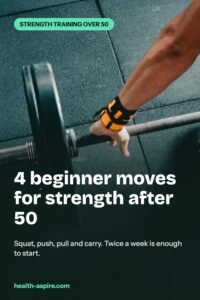
- Legs: chair squats, bodyweight squats or leg presses. Chair squats are a great start: sit down slowly onto a sturdy chair and stand back up, chest up and back straight.
- Pushing: wall push-ups, incline push-ups or dumbbell chest presses. For a wall push-up, place your hands on the wall slightly wider than your shoulders, bend your elbows to bring your chest toward the wall, then push back.
- Pulling: resistance band rows, seated cable rows or dumbbell rows. Pull your elbows back, squeeze your shoulder blades together, then return slowly.
- Shoulders and arms: dumbbell overhead presses, biceps curls and triceps extensions, starting light.
- Core: dead bugs, crunches or back extensions. A couple of simple moves are enough.
How many sets and reps
- Start with 1 set of each exercise, building to 2 or 3 as it gets easier.
- Aim for 8 to 12 repetitions.
- Choose a resistance where the last 1 or 2 reps feel hard but your form stays clean.
- If you can do more than 12 easily, go slightly heavier next time. If you can’t reach 8, or your form slips, go lighter.
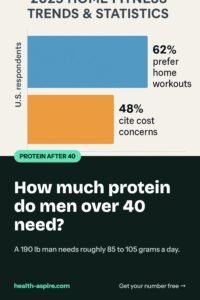
You can do all of this at home. Your body weight, a set of resistance bands and a pair of adjustable dumbbells cover almost every major muscle group. Muscles also need protein to rebuild after training; our free protein calculator gives you a daily target based on your weight and activity.
Common strength training mistakes after 50
The most common mistakes are doing too much too soon, training without a plan, skipping recovery and quitting before results show. Each one is easy to avoid with a short, repeatable routine that you track and build on slowly.
- Too much, too soon. Too many sets or workouts leave you sore and discouraged. Learn the movements first, then add difficulty.
- No plan. Random workouts miss muscle groups. Follow the same simple routine and log it in an app or notebook so you can see progress.
- Ignoring recovery. Muscles get stronger between sessions, not during them. Sleep, eat well and leave a day or two between hard workouts.
- Expecting fast results. You will likely notice that daily tasks feel easier before you see changes in the mirror. That is real progress.
How to make strength training a lifelong habit
The benefits in the study came from habits kept for years, so consistency beats perfection. Missing a session because of travel or a bad week is fine. What matters is getting back to your routine. Small wins count too: two more reps than last time, or climbing the stairs without getting winded.
Make it easy on yourself. Put your workouts in your calendar, pack your gym bag the night before, or keep your dumbbells where you can see them. And remember why you are doing it: to travel, play with your grandchildren, carry your own bags and stay independent for as long as possible.
If you have heart disease, joint problems, or haven’t exercised in a long time, check with your doctor before starting a new program.
What to do next
- Find your daily target with the free protein calculator.
- Check one simple marker of muscle strength: grip strength by age.
- See how fit your heart and lungs are for your age: VO2 max by age.
- More guides on muscle, cardio and mobility in our Strength section.
FAQ
Can 90 minutes of strength training a week really lower the risk of early death?
In the 2026 study, people who did 90 to 119 minutes a week had a 13% lower risk of death from any cause than people who did none. It is an observational link, not proof of cause, but it fits a large body of research on muscle and healthy aging.
Is 45 minutes of strength training twice a week enough?
Yes. Two 45-minute full-body sessions give you 90 minutes a week, which is the range linked to the lowest risk in the study, and it matches the guideline of muscle-strengthening work on at least two days a week.
Can you build muscle after 50?
Yes. Building muscle gets slower with age, but muscles still adapt to training at any age. A steady routine, gradual increases in resistance, enough protein and good recovery all help.
Is walking enough on its own?
Walking is excellent for your heart, but it doesn’t challenge your muscles the way resistance training does. In the study, people who combined aerobic exercise with strength training had the lowest risk of death.
About the author
Dave Durell is the founder of StrengthAfter50.com, where he writes about strength training, mobility and staying active for people over 50.
Sources
- Zhang Y, Lee DH, Rezende LFM, Ma Y, Giovannucci E. Long-term resistance training with all-cause and cause-specific mortality: assessing dose-response and joint associations with aerobic physical activity. British Journal of Sports Medicine. 2026;60(12):874-883. doi:10.1136/bjsports-2025-110503
- US Department of Health and Human Services. Physical Activity Guidelines for Americans, 2nd edition. 2018. health.gov
This guide is for education and is not medical advice. Talk to your doctor before starting a new exercise program. See our medical disclaimer. Photo: Alena Darmel / Pexels.
Free cheat sheet + weekly email
A short, honest health email. Every Thursday.
The week’s most useful research for life after 40, explained in plain English, plus one step picked for what matters to you. No spam, no selling your email, unsubscribe in one click.
Free gift: our 1-page Lab Markers Cheat Sheet (PDF), the 15 numbers on routine blood and urine tests that matter most after 40. It arrives as soon as you confirm your email.