This free calorie calculator estimates how many calories you burn in a day, using the newest equations from the US National Academies (2023), built on measurements of real energy use in thousands of adults. Enter your sex, age, height, weight and activity level to see your maintenance calories, a guideline-based target if you want to lose weight, and what results to really expect.
Free cheat sheet + weekly email
Make your calorie target work for you.
Every Thursday: one short email on weight, muscle and metabolism after 40, based on real research, plus one practical step. No spam, unsubscribe in one click.
Free gift: our 1-page Lab Markers Cheat Sheet (PDF), the 15 numbers on routine blood and urine tests that matter most after 40. It arrives as soon as you confirm your email.
How the calorie calculator works
We use the 2023 Estimated Energy Requirement (EER) equations from the National Academies of Sciences, Engineering, and Medicine. They replaced older formulas because they were built from doubly labeled water studies, the gold-standard way to measure how many calories people really burn in daily life. Your result depends on four things: sex, age, height and weight, plus how active you are.
| Activity level | What it looks like on a typical day |
|---|---|
| Inactive | Daily life only: housework, short walks, desk work |
| Low active | Daily life plus about 60 to 80 minutes of brisk walking |
| Active | Daily life plus about 30 to 50 minutes of walking and about 1.5 hours of other moderate exercise |
| Very active | Daily life plus over 2 hours of moderate to vigorous exercise |
Descriptions are based on the examples in the National Academies 2023 report. If you are unsure, choose the lower level: most people overestimate how active they are.
Calories to lose weight: what the guideline says
The 2013 AHA/ACC/TOS obesity guideline recommends a daily deficit of 500 to 750 calories, which usually means about 1,200 to 1,500 calories a day for women and 1,500 to 1,800 for men, adjusted for body size and activity. Our calculator shows that range for your numbers, and never goes below 1,200 (women) or 1,500 (men).
The 3,500-calorie myth and a realistic timeline
You may have heard that cutting 3,500 calories loses one pound. That rule ignores how the body adapts: as you lose weight, you burn fewer calories. A model developed by NIH researcher Kevin Hall and colleagues predicts that, for an average adult with overweight, each lasting change of 10 calories a day eventually changes body weight by about 1 pound, with half of the change in about a year and 95% in about 3 years.
| Lasting daily cut | Old 3,500-calorie rule (1 year) | NIH model: first year | NIH model: eventually |
|---|---|---|---|
| 250 calories | 26 lb | about 12 lb | about 25 lb |
| 500 calories | 52 lb | about 25 lb | about 50 lb |
Figures are model predictions for an average adult with overweight; individuals vary. That is why weight loss slows down after the first months: it is physics, not failure.
How many calories do you need after 40?
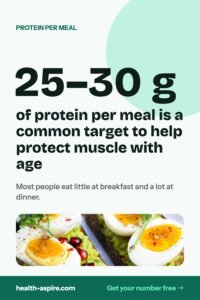
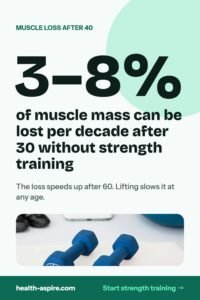
Calorie needs drop with age in the equations (by about 7 calories a year for women and 11 for men, at the same height, weight and activity), mostly because muscle mass tends to fall. Strength training twice a week and enough protein help protect muscle, which keeps your calorie burn higher. Find your daily protein target with our protein calculator, and track belly fat with the waist-to-height ratio calculator.
Is this calorie calculator also a TDEE calculator?
Yes. TDEE stands for total daily energy expenditure: the calories your body burns in a full day, activity included. Most TDEE calculators first estimate your resting burn (BMR) and then multiply it by an activity factor.
This calorie calculator takes a more direct route. It uses the 2023 National Academies (NASEM) equations, which estimate total daily energy expenditure from your age, sex, height, weight and activity level, based on doubly labeled water studies. So the maintenance calories it shows are your estimated TDEE.
Calorie calculator FAQ
How accurate is a calorie calculator?
Equations like these predict the average well, but any one person can differ by a few hundred calories a day. Use the number as a starting point, then adjust after 2 to 3 weeks based on your weekly average weight.
How many calories should I eat to lose weight?
The AHA/ACC/TOS guideline suggests about 500 to 750 calories below your maintenance, which is often 1,200 to 1,500 a day for women and 1,500 to 1,800 for men.
Why did my weight loss slow down?
As you lose weight your body burns fewer calories, so the same diet produces slower loss over time. An NIH model predicts that about half of the total change happens in the first year.
Does this work during pregnancy?
No. Pregnancy and breastfeeding change calorie needs, and the calculator is not designed for them. Ask your doctor or midwife.
This calculator is for education, not diagnosis, and does not replace advice from your doctor. Last reviewed: October 28, 2026. See our medical disclaimer.
Sources
- National Academies of Sciences, Engineering, and Medicine. Dietary Reference Intakes for Energy (2023)
- Jensen MD et al. 2013 AHA/ACC/TOS Guideline for the Management of Overweight and Obesity in Adults. Circulation, 2014
- Hall KD et al. Quantification of the effect of energy imbalance on bodyweight. Lancet, 2011
- Hall KD, Chow CC. Why is the 3500 kcal per pound weight loss rule wrong? Int J Obes, 2013