
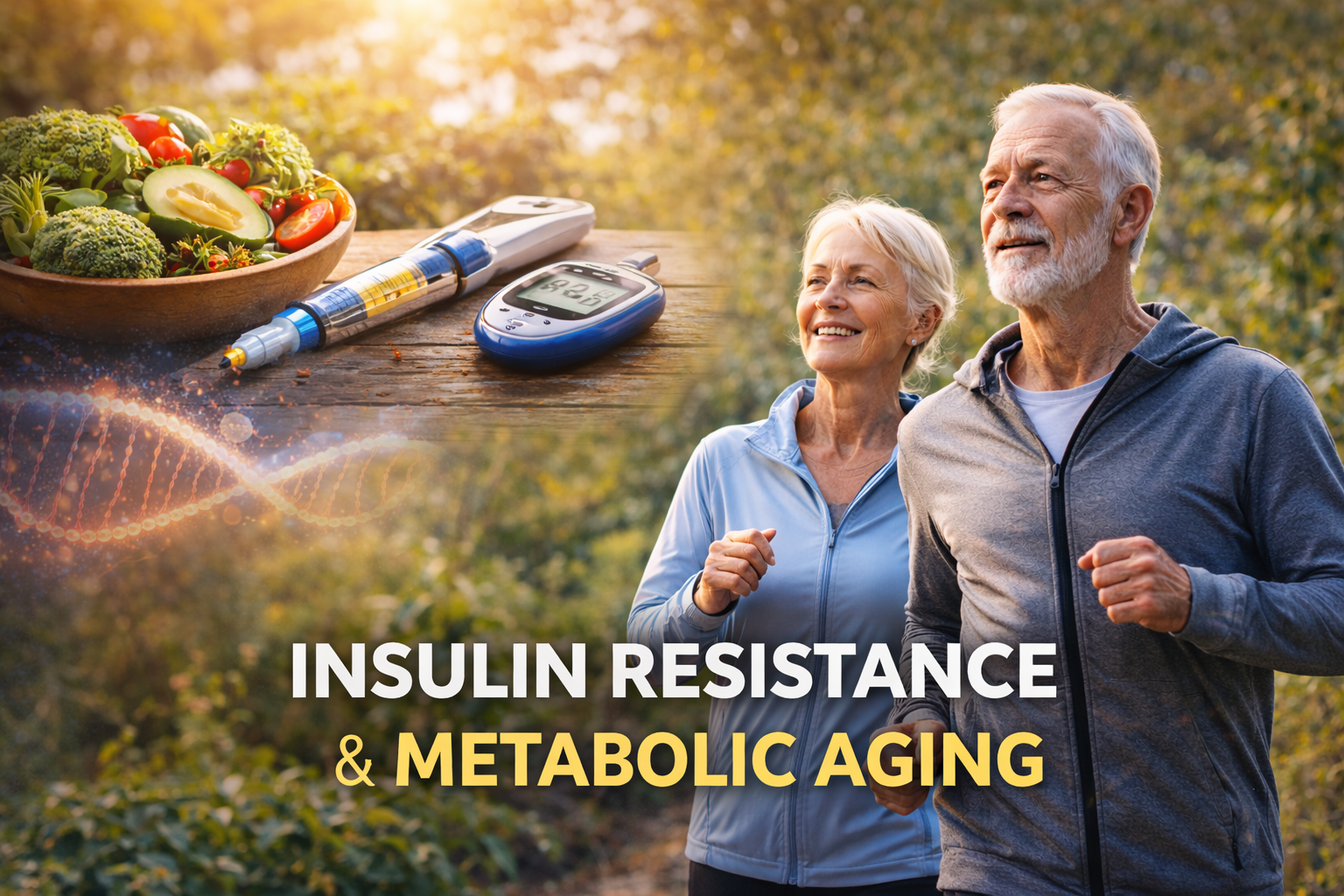
Insulin Resistance: The Silent Driver of Accelerated Aging
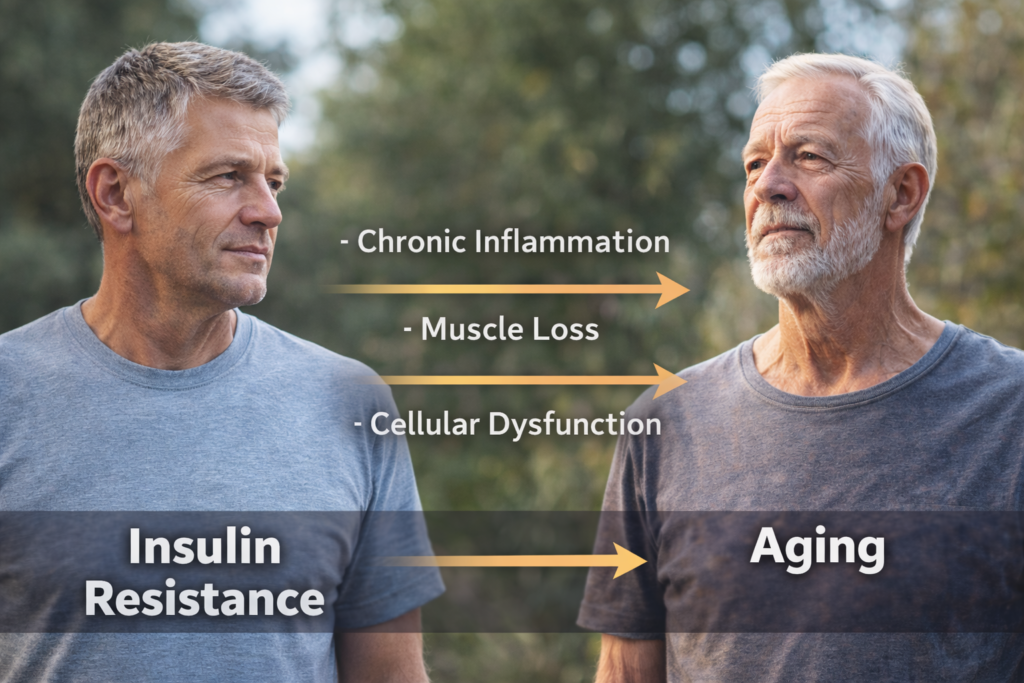
Insulin resistance is one of the most underestimated processes in modern health. It develops quietly, often years before any diagnosis, yet it plays a central role in how fast the body ages. Long before blood sugar reaches clinical thresholds, insulin resistance begins to disrupt energy production, muscle preservation, fat metabolism, and cellular repair.
From a longevity perspective, insulin resistance is not just a metabolic issue — it is a biological aging accelerator.
Understanding how insulin resistance develops, why it worsens after 40, and how it impacts long-term health is essential for anyone focused on aging well rather than simply living longer.
What Is Insulin Resistance?
Insulin is a hormone that allows glucose to move from the bloodstream into cells, where it is used for energy. Insulin resistance occurs when cells become less responsive to insulin’s signal, forcing the body to produce more insulin to maintain normal blood sugar levels.
Over time, this state of chronically elevated insulin creates a cascade of metabolic stress, including increased inflammation, impaired fat metabolism, and reduced cellular efficiency.
This process sits at the center of metabolic health and longevity, making insulin sensitivity a foundational factor in how the body ages.
Why Insulin Resistance Accelerates Aging
Insulin resistance affects multiple systems that directly influence biological aging:
- It promotes chronic inflammation
- It disrupts mitochondrial energy production
- It accelerates muscle loss
- It increases visceral fat accumulation
- It impairs cellular repair mechanisms
These effects compound over time. Even individuals who appear outwardly healthy can experience accelerated aging if insulin resistance remains unaddressed.
Modern longevity science increasingly recognizes insulin resistance as a primary driver of age-related decline, rather than a secondary consequence of aging.
Insulin Resistance After 40: Why Risk Increases
After the age of 40, several physiological shifts increase susceptibility to insulin resistance:
- Muscle mass declines, reducing glucose uptake capacity
- Hormonal patterns change, particularly growth hormone and sex hormones
- Physical activity often decreases
- Sleep quality becomes more fragile
Together, these changes reduce metabolic flexibility — the body’s ability to efficiently switch between fuel sources.
This is why insulin resistance is so closely tied to outcomes discussed throughout the Longevity & Metabolic Health framework, rather than being an isolated condition.
Common Signs of Insulin Resistance
Insulin resistance rarely appears suddenly. Instead, it develops gradually, often presenting with subtle signals such as:
- Energy crashes after meals
- Increased abdominal fat
- Difficulty maintaining muscle mass
- Sugar cravings
- Brain fog or reduced mental clarity
These symptoms often precede measurable changes in blood glucose and should not be ignored from a longevity standpoint.
The Link Between Insulin Resistance and Metabolic Age
Insulin resistance strongly influences metabolic age — a measure of how efficiently the body functions compared to chronological age.
As insulin sensitivity declines:
- Energy production becomes less efficient
- Recovery slows
- Inflammation increases
This connection explains why insulin resistance is a recurring theme across discussions of longevity and metabolic resilience.
Improving Insulin Sensitivity: A Longevity-Oriented Approach
Reversing insulin resistance does not require extreme measures. Sustainable improvements come from targeting the systems insulin resistance disrupts:
Key strategies include:
- Preserving and building muscle through resistance training
- Prioritizing consistent, high-quality sleep
- Managing stress to reduce cortisol-driven insulin disruption
- Maintaining daily movement, especially post-meal activity
- Supporting metabolic health through nutrient-dense foods
These habits work synergistically to restore insulin sensitivity while supporting long-term healthspan.
Insulin Resistance vs. Blood Sugar: A Critical Distinction
One of the most common misconceptions is that insulin resistance only matters once blood sugar becomes elevated.
In reality, insulin resistance can exist for years with “normal” glucose readings. By the time blood sugar rises, metabolic damage may already be advanced.
This distinction reinforces why insulin sensitivity is emphasized in modern longevity-focused metabolic health strategies.
Why Insulin Resistance Matters for Longevity
Longevity is not determined by age alone. It is shaped by how efficiently the body manages energy, repairs tissue, and adapts to stress.
Insulin resistance interferes with all three.
By addressing insulin resistance early — particularly after 40 — individuals can slow biological aging, preserve physical function, and extend healthspan rather than simply lifespan.
Final Thoughts
Insulin resistance is not an inevitable consequence of aging. It is a modifiable metabolic state that responds powerfully to targeted lifestyle changes.
When viewed through a longevity lens, improving insulin sensitivity becomes one of the most effective ways to influence how well — and how long — the body functions over time.
For a broader understanding of how insulin resistance fits into the full longevity picture, explore the foundational principles outlined in Longevity & Metabolic Health.





**back biome official**
Mitolyn is a carefully developed, plant-based formula created to help support metabolic efficiency and encourage healthy, lasting weight management.