
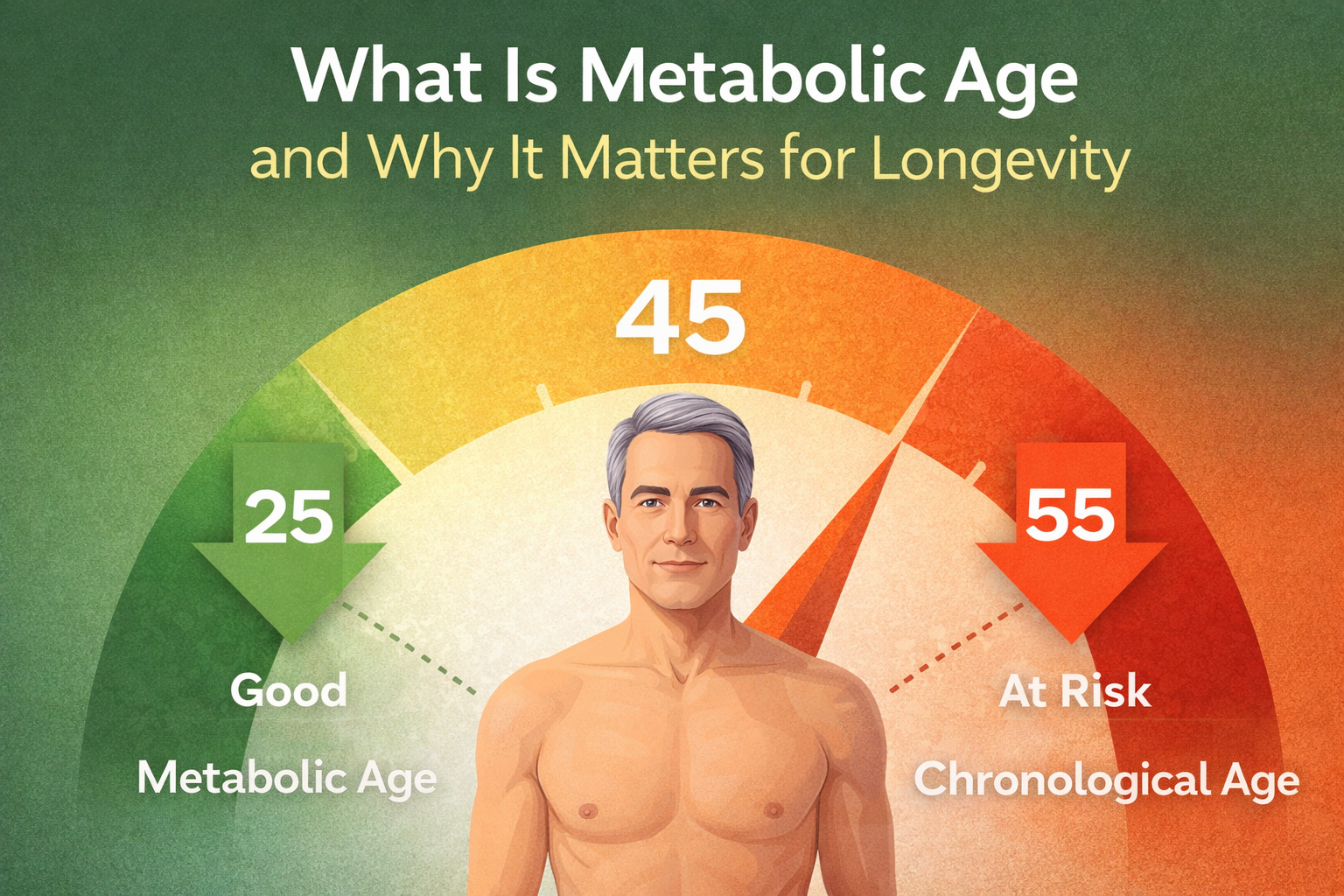
What Is Metabolic Age and Why It Matters for Longevity
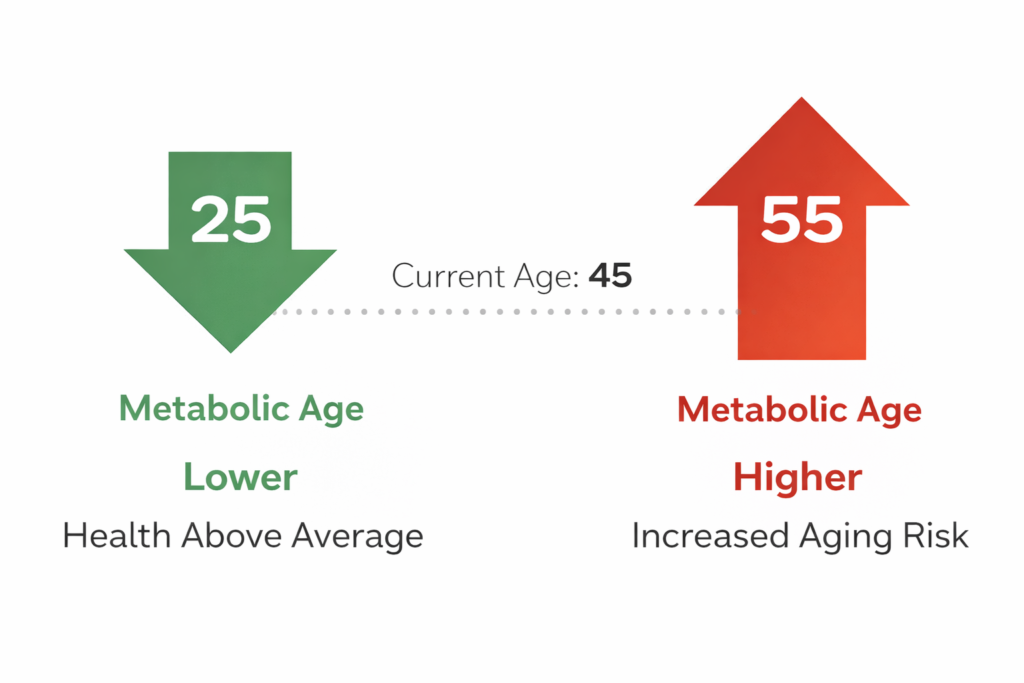
Aging is often treated as a simple number on a calendar. However, modern health science tells a very different story. Two people of the same chronological age can have radically different energy levels, disease risks, and long-term health outcomes. One of the most accurate ways to understand this difference is through metabolic age.
As explained in our Longevity & Metabolic Health guide, aging well depends less on how old you are and more on how efficiently your body manages energy, blood sugar, muscle, and recovery. Metabolic age provides a clearer lens into this process.
What Is Metabolic Age?
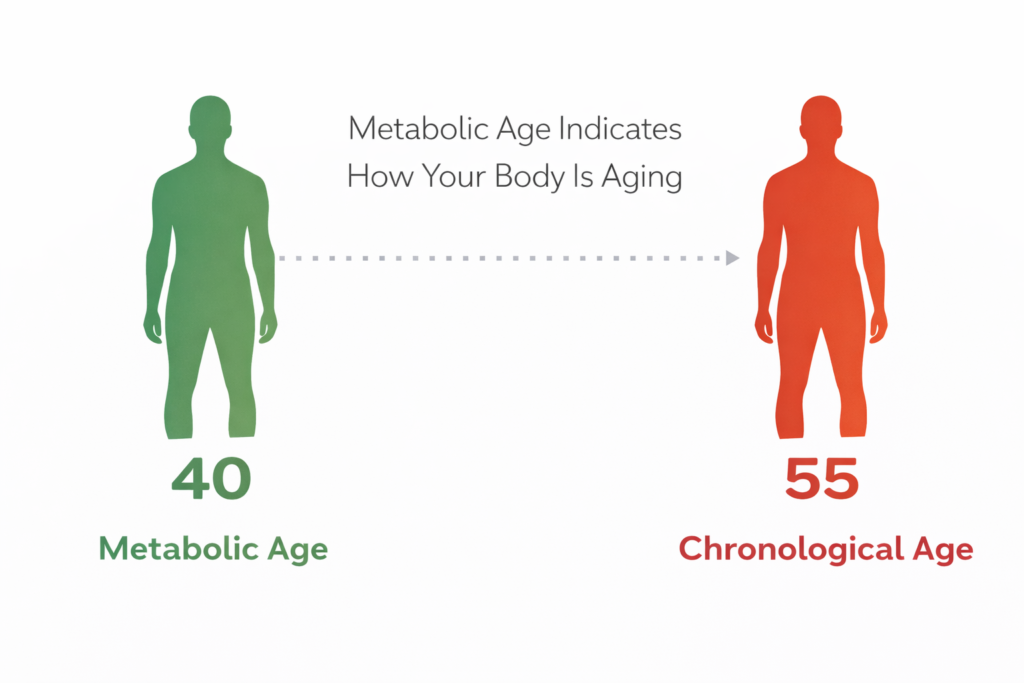
Metabolic age is a comparison between your body’s metabolic function and the average metabolic health of people at different ages. In simple terms, it reflects how “old” your metabolism behaves relative to population norms.
If your metabolic age is:
- Lower than your actual age → your metabolic health is above average
- Higher than your actual age → your metabolism is aging faster than expected
Unlike chronological age, metabolic age is dynamic and modifiable.
How Metabolic Age Is Determined
Metabolic age is not a single measurement. Instead, it reflects several interconnected markers, including:
- Insulin sensitivity and blood glucose control
- Body composition (muscle vs fat mass)
- Resting metabolic rate
- Physical activity levels
- Cardiovascular fitness
- Inflammatory markers
Many modern devices estimate metabolic age using indirect calculations, but clinical research consistently shows that muscle mass, insulin sensitivity, and cardiorespiratory fitness are the strongest contributors.
Why Metabolic Age Matters More Than Weight
Weight alone is a poor indicator of health.
Research shows that individuals with a “normal” body weight can still have:
- insulin resistance
- chronic inflammation
- poor metabolic flexibility
This condition is often referred to as metabolically unhealthy normal weight (MUNW). In these cases, metabolic age may be significantly higher than chronological age — even in people who appear lean.
This is why longevity science prioritizes metabolic health over scale weight.
The Link Between Metabolic Age and Longevity
Multiple large-scale studies demonstrate that metabolic markers predict mortality and disease risk more accurately than body mass index (BMI).
People with a lower metabolic age tend to have:
- reduced cardiovascular disease risk
- lower incidence of type 2 diabetes
- better cognitive outcomes with aging
- higher levels of physical independence later in life
In other words, metabolic age reflects healthspan, not just lifespan.
Muscle Mass: A Central Driver of Metabolic Age
Muscle tissue plays a critical role in metabolic regulation. It is one of the primary sites for glucose uptake and insulin sensitivity.
With age:
- muscle mass naturally declines
- resting metabolic rate decreases
- insulin sensitivity worsens
This process, known as sarcopenia, accelerates metabolic aging if not addressed.
Maintaining muscle through resistance training is one of the most effective ways to lower metabolic age and support longevity.
Insulin Resistance and Accelerated Metabolic Aging
Insulin resistance is one of the earliest and most damaging contributors to rising metabolic age.
When cells respond poorly to insulin:
- blood sugar remains elevated
- fat storage increases
- inflammation rises
- energy regulation becomes inefficient
Over time, this creates a cascade that accelerates biological aging. For a deeper exploration of this mechanism, see our upcoming guide on insulin resistance and aging.
Inflammation and Metabolic Dysfunction
Chronic low-grade inflammation — often called inflammaging — is strongly associated with increased metabolic age.
Common contributors include:
- poor sleep quality
- visceral fat accumulation
- sedentary behavior
- chronic psychological stress
Reducing inflammation improves insulin sensitivity, mitochondrial function, and metabolic resilience.
Can You Lower Your Metabolic Age?
Yes. Unlike chronological age, metabolic age is highly responsive to lifestyle interventions.
Evidence-based strategies include:
1. Strength Training
- Preserves and builds muscle mass
- Improves glucose uptake
- Increases metabolic efficiency
2. Daily Movement
- Walking after meals improves blood sugar control
- Reduces prolonged sitting time
- Enhances metabolic flexibility
3. Sleep Optimization
- Supports hormonal regulation
- Improves insulin sensitivity
- Reduces inflammatory burden
4. Nutrition for Metabolic Support
- Adequate protein intake
- Fiber-rich whole foods
- Minimizing ultra-processed foods
5. Stress Management
- Lowers cortisol
- Improves metabolic signaling
- Supports recovery and sleep
Small, consistent changes compound over time.
Metabolic Age vs Chronological Age: A Practical Perspective
Chronological age is fixed. Metabolic age is not.
Two individuals at 50 years old can differ dramatically in:
- strength
- endurance
- metabolic resilience
- disease risk
This gap is where longevity strategies make the greatest impact.
Metabolic Age and Modern Weight Loss Approaches
Some modern weight loss methods can reduce scale weight while worsening metabolic health by:
- reducing muscle mass
- increasing metabolic adaptation
- impairing long-term insulin sensitivity
This is why any intervention aimed at longevity must prioritize metabolic function over rapid weight loss. Our analysis of the Ozempic weight loss revolution explores this distinction in more detail:
👉 https://health-aspire.com/blog/ozempic-weight-loss-revolution/
Key Takeaways
- Metabolic age reflects how efficiently your body functions
- It predicts longevity better than weight alone
- Muscle mass and insulin sensitivity are central
- Inflammation accelerates metabolic aging
- Metabolic age can improve at any stage of life
Where This Fits in the Longevity Framework
This article is part of our Longevity & Metabolic Health series.
Next, we’ll explore:
- insulin resistance and aging
- chronic inflammation and longevity
- muscle mass as a predictor of lifespan
Each topic builds on the same metabolic foundation introduced in our pillar guide:
👉 https://health-aspire.com/blog/longevity-metabolic-health-guide/






When you are exploring the most suitable colors for light skin or looking to figure out your seasonal color palette, resources like color analysis apps and quizzes can be extremely helpful. For instance, doing an undertone vein test can determine whether you have blue veins undertone or yellow undertone skin, which is necessary when selecting between deep summer color palette or light spring color palette. You can also examine free online color analysis services to get a swift idea of what colors complement on pale skin or yellow skin tone.
Seasonal color analysis breaks down skin tones into segments like deep summer, soft summer, or dark winter color palette, enabling you find your most flattering shades. For those with unusual skin tones such as amber skin tone, olive skin tone, or red undertone skin, knowing your skin shade chart and seasonal color palette genuinely makes a impact in clothing picks. If you desire to dive deeper into color analysis pro or try different hair color simulators combined with your skin tone color, visit deep summer color analysis to get underway.