
Longevity & Healthy Aging
Evidence-based insights on metabolic health, brain function, sleep, and immunity — helping you live better today and stay healthier for decades.

What Longevity Really Means
Longevity means more than simply living longer. It focuses on healthspan — the number of years you live in good physical, mental, and metabolic health.

Metabolic Health
Blood sugar imbalance and metabolic dysfunction accelerate aging. Improving insulin sensitivity and supports long-term vitality and overall health.

Chronic Inflammation
Chronic inflammation silently damages cells and accelerates biological aging. Reducing inflammatory load helps protect tissues and lower long-term disease risk.

Sleep & Recovery
Poor sleep quality and inadequate recovery disrupt hormones and repair. Restoring circadian rhythm supports longevity, and long-term health balance.

Stress Resilience
Chronic stress and poor mental recovery impact brain aging. Protecting cognitive function and building stress resilience are essential for long-term quality of life.
The Core Systems That Drive Human Longevity
Modern longevity science shows that aging is not controlled by a single factor, but by the interaction of multiple biological systems. Metabolic health, inflammation, sleep quality, and brain resilience work together to determine how fast or how well we age. When these systems are balanced, the body maintains cellular repair, hormonal stability, and long-term vitality.
This page serves as a central guide to the core mechanisms that influence human longevity. By understanding how these systems connect—and how daily habits shape them—you can make informed decisions that support long-term health, resilience, and quality of life.
Explore the Longevity Pillars
Metabolic Health
Blood sugar, insulin sensitivity, and metabolic flexibility support healthy aging.

Brain Health
Cognitive function, memory, and emotional resilience shape how well we age mentally.

Sleep & Recovery
Circadian rhythm, deep sleep, and recovery processes drive repair and longevity.

Immune System
Inflammation control and immune balance influence long-term disease risk.
Key Signals of Healthy Aging
Healthy aging is reflected in measurable biological and lifestyle signals.
Below are the core longevity markers — supported by in-depth science-based articles.

Regulating energy and blood sugar over time
Balanced blood sugar and insulin sensitivity are foundational for healthy aging. When metabolic control is lost, inflammation rises and cellular damage accelerates. Supporting metabolic flexibility helps preserve energy, organ function, and long-term vitality.
Reducing silent damage at the cellular level
Low-grade chronic inflammation gradually harms tissues and accelerates biological aging. It plays a central role in cardiovascular disease, metabolic disorders, and neurodegeneration. Controlling inflammation is key to slowing age-related decline.

Optimizing repair through circadian rhythm
Quality sleep drives cellular repair, hormone balance, and immune regulation. Disrupted sleep increases inflammation and metabolic stress. Restoring circadian rhythm supports recovery processes essential for long-term health and longevity. Sleep quality strongly influences biological aging.
Protecting cognitive function over a lifetime
Chronic stress impairs memory, emotional balance, and brain structure. Long-term cognitive health depends on stress regulation, mental resilience, and nervous system recovery. Supporting brain health is critical for quality of life as we age. Mental resilience preserves focus and clarity.
Explore Our Longevity Research & Guides
Deep dives into the biological systems, habits, and science that shape healthy aging and long-term vitality.
-
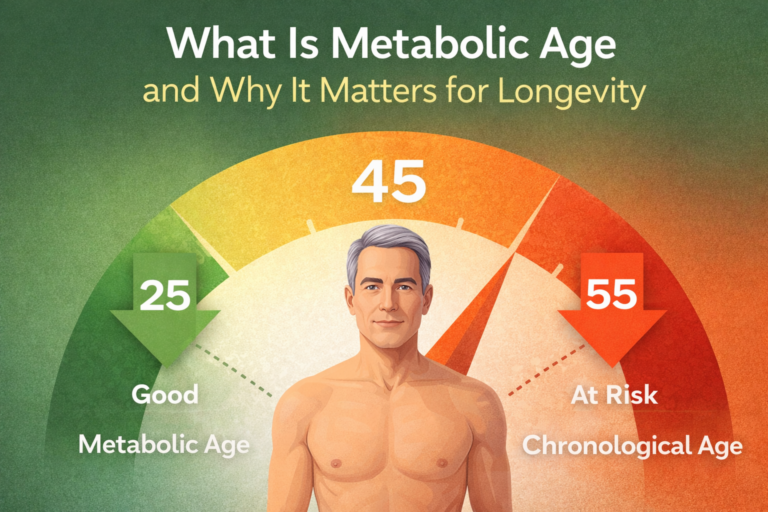
What Is Metabolic Age and Why It Matters for Longevity
Aging is often treated as a simple number on a calendar. However, modern health science tells a very different story. Two people of the same chronological age can have radically different energy levels, disease risks, and long-term health outcomes. One…
-
Longevity & Metabolic Health: The Science of Living Better After 40
Longevity is no longer just about adding years to life. Today, the real goal is extending healthspan — the number of years you live with strength, clarity, mobility, and metabolic balance. As people cross the age of 40, one system…
-
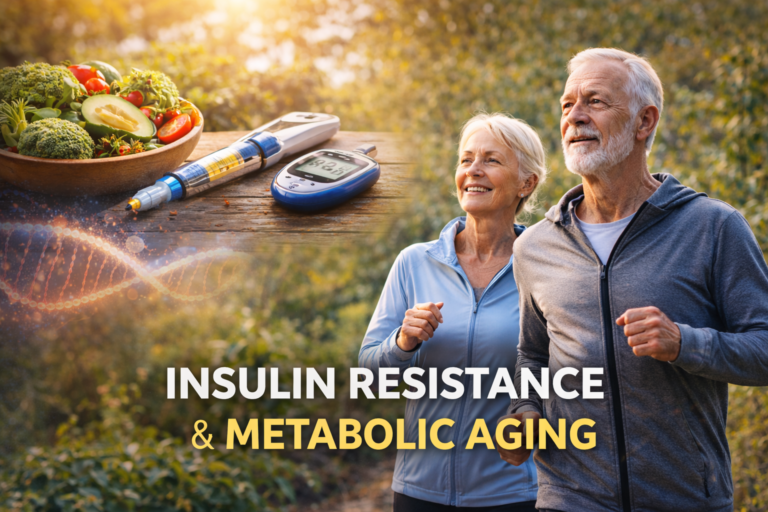
Insulin Resistance: The Silent Driver of Accelerated Aging
Insulin resistance is one of the most underestimated processes in modern health. It develops quietly, often years before any diagnosis, yet it plays a central role in how fast the body ages. Long before blood sugar reaches clinical thresholds, insulin…

Cellular Aging & Chronic Inflammation
Aging begins at the cellular level. Chronic inflammation, mitochondrial dysfunction, and impaired cellular repair accelerate biological aging and increase disease risk. Understanding how cellular damage accumulates over time is essential for extending healthspan, not just lifespan.
FAQ
Longevity refers to the ability to live a longer life while maintaining good physical, mental, and metabolic health. Modern longevity science focuses not only on lifespan, but on healthspan — the years lived with vitality, independence, and low disease risk.
Healthspan is the number of years a person lives in good health, free from chronic disease and functional decline. Improving healthspan means preserving energy, mobility, cognitive function, and metabolic balance as we age — not just adding more years to life.
Metabolism plays a central role in how fast the body ages. Poor blood sugar control, insulin resistance, and metabolic inflexibility accelerate cellular damage, inflammation, and age-related diseases. Supporting metabolic health helps slow biological aging and protect long-term vitality.
Yes. Scientific evidence shows that lifestyle factors such as nutrition, physical activity, sleep quality, stress management, and metabolic balance strongly influence the aging process. Consistent healthy habits can slow biological aging and extend healthspan over time.